

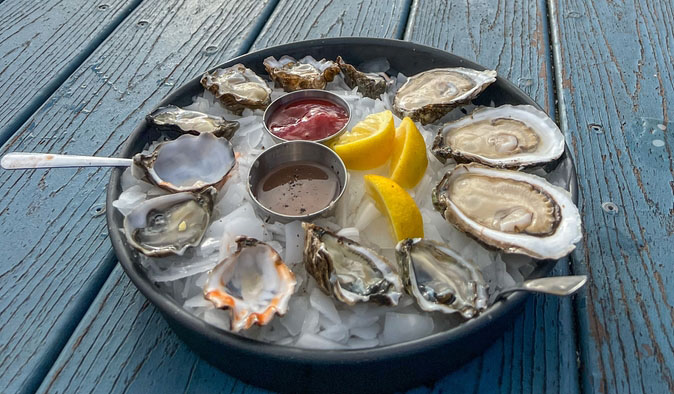
A platter of fresh North Carolina oysters is a holiday treat but recycling shells for oyster reefs at the coast and new oysters is just scratching the surface. Efforts in Orange and Wake are raising awareness about the importance of recycling oyster shells. Remember, putting them in the trash or using them in your garden is not allowed in North Carolina.
North Carolina’s oyster population has been in decline for years due to overharvesting, pollution, loss of habitat. One way to help restore the wild oyster population is recycling oyster shells and putting them back in the water for oyster reefs and living shorelines.
Orange and Wake Counties are miles from the Carolina Coast but both are knee-deep in oyster shell recycling.
Orange County collects them and the N.C. Coastal Federation transports them to the coast where they are put to use.
In Orange, the oyster shell collection site is at the Orange Co. Recycling Center at the landfill, 1514 Eubanks Rd., Chapel Hill. Stop at the weigh-in shed for disposal instructions. Center’s open Mon-Fri and Saturday mornings. Squid’s and Huey’s are the flagship oyster recyclers.
Wake collects oyster shells at all 11 convenience centers across the county and Shell Recyclers LLC, a contractor for NCCF, works with two seafood markets and restaurants in Raleigh to haul their shells.
The Durham recycling website says to take them to the Orange County collection center.
Since 2005 it’s been illegal to send oyster shells to the landfill or use them as mulch in your garden. When the ban was passed by the legislature there were two other key features. There was a $1/bushel tax credit and the Division of Marine Fisheries was directly involved. They’d take shells to the coast and stockpile them for reef projects they were developing in coastal waters.
The program lasted ten years before the General Assembly dropped the tax benefit and cut personnel funding from the state budget, knocking out two of the three legs of the program.
There’s no enforcement of the landfill ban or the prohibition against cans and glass bottles.
Since then the Newport-based N.C. Coastal Federation, a non-profit, coordinates drop-off sites in eastern N.C. (Orange/Wake are the furthest west collection points) and partners with organizations like the Nature Conservancy for new reefs. They build new reefs where baby oysters can grow. They also serve as new breakwaters that protect shorelines from the impact of storms and tide surges.
Goals for the coming year: expand oyster shell recycling sites throughout the state; restore oyster populations, including more than 50 acres of new reef restored this year.
Nicholas Green, project manager for the Coastal Federation, explained what happens to the oyster shells. “Once oysters are eaten at a restaurant, the shells are placed in buckets or bins. Then, when they are full, they are transported to a stockpile site at the Orange Co. landfill. The shells normally stay at the stockpile site to cure for at least six months and then taken to the Carolina Coast.
“This curing process allows for the decomposition of any leftover meat and other organic matter. This is important so that we do not spread bacteria to other sites. Once the shells have been cured, they will be used by various organizations, such as Marine Fisheries, NC Coastal Federation to create living shorelines or used as cultch material in the oyster sanctuaries.”
Joel Bulkley