


Chip Bremer
To say the ACC as a conference had a disappointing men’s basketball season in 2024-25 would be a significant understatement.
Sure, Duke and national Player of the Year Cooper Flagg took a #1 ranking and NCAA tournament top seed to the Final Four, and Pat Kelsey turned last-place Louisville into an NCAA tourney team with a totally revamped roster, but those were the only highlights of a season that was easily forgettable for most of the conference.
With only four ACC teams making it into the Big Dance—and all of them exiting in disappointing fashion—it’s a good time to dissect what went wrong, but most of it comes down to one thing: a lack of toughness.
Throughout the entire season, the media lauded the success of the SEC, which culminated in the conference placing a record-breaking 14 of 16 teams in the NCAA tournament and with Florida finally winning the whole thing.
In contrast, the ACC was more of a footnote with just four teams making the tourney and then all but one (Duke) eliminated before the Sweet 16.
Reasons for the poor showing ranged from the lack of competition within the conference, lack of talent and even a lack of coaches who could successfully navigate the new NIL landscape of college sports (we’ll get to that in a bit). It was even apparent early in the season—when ACC teams lost 14 of the 16 games during December’s ACC-SEC Challenge—that the conference was in trouble.
But it wasn’t more apparent until postseason play that the ACC’s best just couldn’t match the physicality and mental toughness of opponents from other major conferences. Getting outrebounded on both ends of the floor, giving up easy shots, not being able to break the press—all these were exposed during the losses of ACC teams in the NCAA and NIT tournaments.
Even Duke–with as talented a roster as Durham had seen in recent years—was not immune to this issue. Going into the tournament, the one concern continually circulated about the Blue Devils was that they were rarely challenged throughout the ACC schedule. Combine that with the tendency of ACC officials to call more fouls than necessary (likely with the intention of opening the game up for more offense), and one could say that Duke was the softest #1 seed in the field, and it showed during the team’s collapse against Houston in the Final Four. Not to take anything away from Houston’s outstanding defensive effort, but that game will be remembered more about how Duke choked rather than how Houston stole the win.
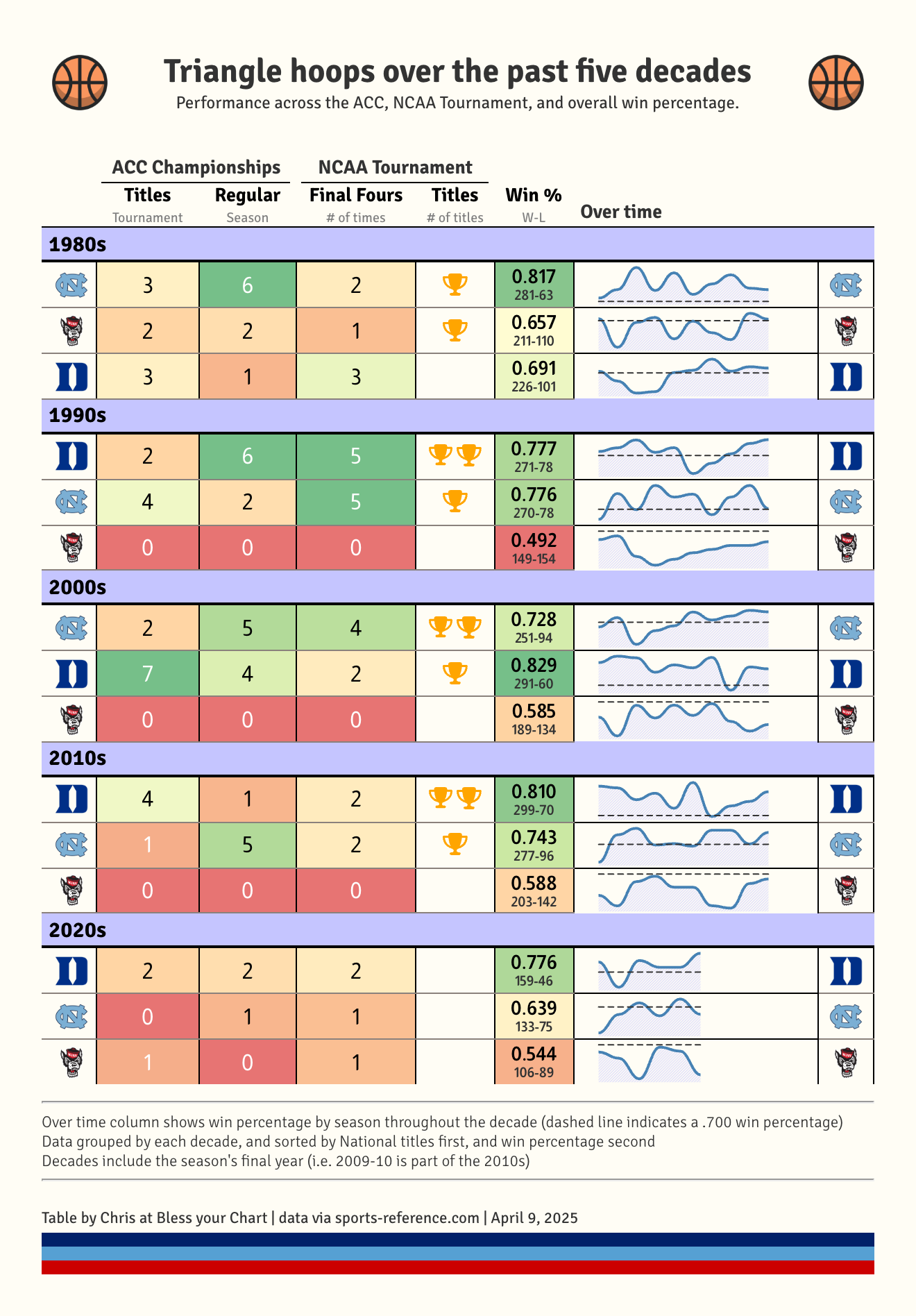
But that game was just indicative of how the ACC has fallen overall. UNC struggled all season to find consistent offense to win games that matter, and even just squeaking into the Big Dance was a disappointment from the preseason hype.
NC State made the Final Four a year ago but never mustered the offense necessary to qualify for the ACC tournament.
Miami pretty much just gave up when head coach Jim Laranaga did the same early in the season. Syracuse, Notre Dame, Florida State, Virginia, Virginia Tech… the list goes on.
If the ACC has any hope of regaining its status as a relevant conference, it needs to get tougher. Whether that means scheduling tougher competition, recruiting tougher coaches and players, or learning how to work around officials’ touch-foul tendencies, something has to change.
Otherwise, the conference will find itself carved up and assimilated into the SEC or Big Whatever.
So, what does this mean for 2025-26?
Fortunately for Duke fans, they’ve got another top-notch recruiting class coming in led by the Boozer twins (Cameron and Cayden), so they’ll be among the nation’s elite yet again. There’s a good chance Jon Scheyer will fill the vacancies of Flagg and the other early departures with some gritty veterans through the transfer portal who are specialists at closing out tight games.
Pat Kelsey did so much more than just revive the Louisville program with his magic transfer portal roster overhaul—he put the Cardinals back on the map with national recruits. Now Louisville is considered on the same footing as Duke—meaning it’s the only other program garnering national attention.
Will UNC join them? That will depend on whether Hubert Davis can recruit his way around the personnel losses he’s sustained and give the program the high-octane firepower and the aggressive rebounding it needs to become what it once was. Davis will have to prove he can be the coach who can recruit the transfer portal aggressively and take the same approach to the court.
As for the new coaches, Jai Lucas has already set himself up nicely in Miami. His ability to recruit through the portal combined with the vicious defensive style he leveraged at Duke, will eventually make him a formidable piece in the ACC coaching fraternity.
Ryan Odom is a perfect fit at Virginia, and he has the connections to make the local recruiting pipeline relevant again. He also exhibits the toughness that can make the Cavaliers program an ACC player in the future.
But the most immediate impact might come from Will Wade in Raleigh, where he has recruiting experience to take the Pat Kelsey approach and revamp the Wolfpack roster and the coaching acumen to build a solid foundation without having to worry about getting caught paying players—which is essentially what everyone does now anyway.