

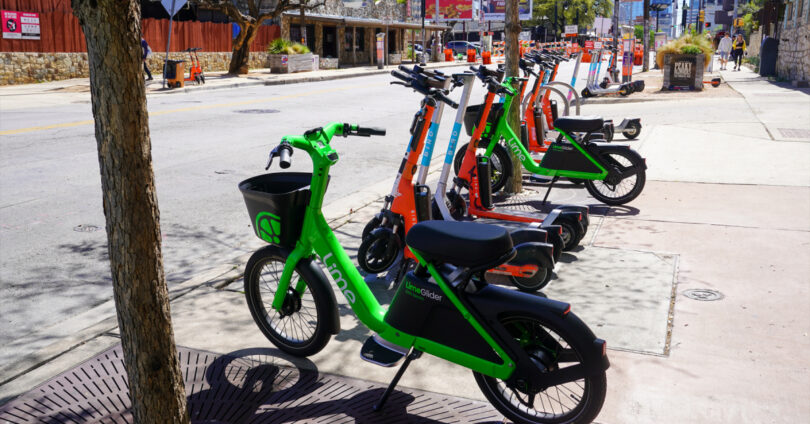
More than a thousand e-bikes and e-motos were exchanged for gift cards at an Orange County, California Buy-Back program Sep. 13 at Angel Stadium, the Wall Street Journal reported. It was the first event of its kind (modeled after gun buy-backs) and organized by the DA’s Office in reaction to a surge in e-bike accidents, injuries, fatalities.
They used $110,000 worth of gift cards and ran out early in the day. Cards worth $200-$1,000 depending on the bike’s classification were distributed. The cards were paid for with funds from seized criminal assets. The bikes from the buy-back program will be destroyed, organizers said.
E-bike injuries rose over 1,000 percent nationally between 2020 and 2024 (1,200 injuries), according to a study of hospital data by San Diego State University.
Orange County (CA) District Attorney Todd Spitzer, known as a tough prosecutor of e-bike violations, said, “What I can change is getting parents’ attention to the serious consequences they could face.” He has charged parents in cases involving fatalities and their children with child endangerment and involuntary manslaughter, according to news reports.
California puts e-bikes into three categories with pedal assistance up to 28 miles per hour. Electric motorcycles or “e-motos” which can go faster, require a driver’s license.
New York City
At least 28 people who were riding e-bikes and standup scooters have died in crashes in New York City in 2026, the New York Times reported 10/1. NYC has a speed limit of 15 mph for e-bikes and e-scooters, and riders must be at least 16 years of age.
Meanwhile, 23 measures, including the proposed Priscilla’s Law, were debated by the New York City Council at a hearing on e-bikes last month. Priscilla’s Law, named after Priscilla Loke, an educator who was killed in 2023 on her way to work by a rider of a Citi e-bike. The proposed state bill would require all e-bikes and scooters in New York to be registered and display license plates and would crack down on illegal (high speed) e-bikes, according to news reports.
North Carolina
E-bike accidents, injuries and fatalities including two in Wilson last month also are on the rise in North Carolina.
A new state law taking effect Dec. 1 will change how e-bikes are classified and regulated.
Section 19 of S.L. 2026-46 adopts a three-class system for e-bikes, matching classifications used by most other states. Under the law, an e-bike is defined as a two- or three-wheeled bicycle with pedals and an electric motor of no more than 750 watts, falling into one of three classes:
Class 1—assists only while pedaling, up to 20 mph
Class 2—assists whether pedaling or not, up to 20 mph
Class 3—assists only while pedaling, up to 28 mph
The law expands the definition of “electric assisted bicycles” to include Class 3 e-bikes, which were previously classified as mopeds. Under the new definition, e-bikes generally will be considered electric-assisted bicycles or motorcycles, but not mopeds, depending on their maximum powered speed or motor size.
The law also creates a new statute, G.S. 20-171.3, allowing e-bikes on any roadway, bicycle lane or sidewalk, subject to additional rules from local governments or the state Department of Natural and Cultural Resources on property it oversees like state parks. Riders or passengers under 18 on a Class 3 e-bike will be required to wear a helmet. Violating the helmet requirement on or after Dec. 1 will be an infraction under G.S. 20-176.