

Chris Maroldy
It’s turkey time!
Friends south of us are already chasing gobblers, but NC turkey season is just cranking up. I’ve been keeping an ear out for reports from all over (just got a pic of a bird a buddy in Nebraska got in their bow season) and while the hunters I’m in closest touch with are having success, I’m also hearing a lot of grumbling about decreased populations, less gobbling being heard, and a few more of the usual complaints that are always circulating, especially on the internet.
Many times that kind of talk is just grousing (see what I did there?) but there is some truth that there is some trouble in turkey paradise. The high turkey harvest numbers NC boasts the last few years are masking some underlying problems in turkey management, both here at home and in the wider turkeysphere.
In broad studies across turkey territory, estimated abundance of the birds seems to have declined in recent years. The drop is particularly marked if you go back to 2004, which is roughly when formal state turkey restoration projects wound down.
Hunting pressure does not seem to be a factor in the decline, according to several scientific studies and sources. North Carolina authorities seem pretty happy with season dates and bag limits. They reference the NC Wild Turkey Ecology Research Project (2020-2024), but also note that the data suggest the season shouldn’t start any earlier nor go any longer, and that bag limits should not be increased.
Habitat loss and problematic land management coupled with natural predation seem to be the modern turkey’s primary problems. Of course, state biologists can’t control for those things very well, especially on private ground, so they sometimes resort to the tool they have, which is influence to reduce seasons and/or limit harvest.
We’re not there yet here in the Old North State, but other game departments have taken steps to limit pressure on gobblers, particularly from non-resident “destination hunters,” who are easier targets politically than resident nimrods who are used to getting X tags per year when they plunk down their license money.
We’ll see what positive effect this has, if any.
In the meantime, it does appear that state biologists should be concerned about habitat quality and loss, and poor poult survival. These are all interrelated.
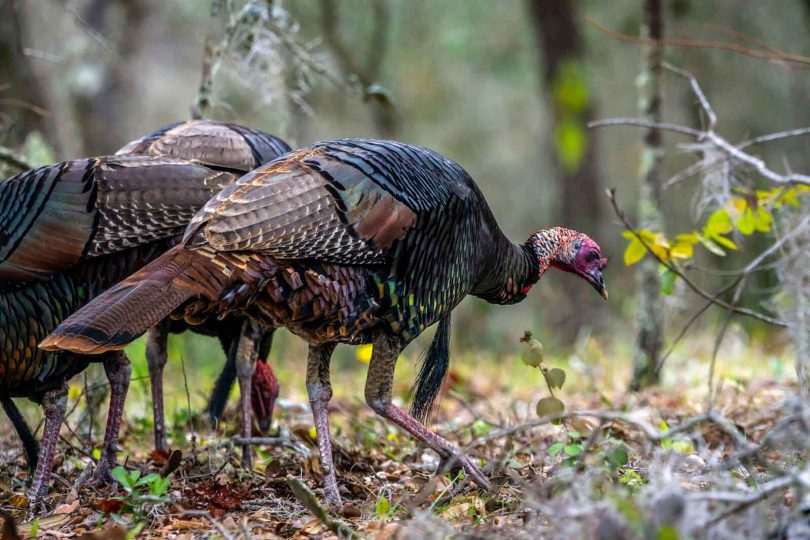
The habitat turkeys need to thrive should contain a lot of open forest and savanna with a lot of sunlight and herbaceous plants at ground level. This provides food and cover for turkeys and is the ideal nesting scenario. Turkeys roost in trees but nest on the ground, and this exposes to predation the turkeys, their eggs and their Young.
Too, studies have shown that the timber management practices most prevalent on private land today, which usually forego regular prescribed burns in favor of letting a thick understory grow up or a canopy develop, are not optimal for turkeys but are very favorable to their predators, such as possums and raccoons. In a nutshell, there are several reasons turkeys produce fewer poults in the thicker,
canopied woods we’re giving them—but their predators prefer that environment as well. Game biologists call that “The Double Whammy.” (Well, not really, but maybe they should.)
The bottom line is wild turkeys could use some help. The management practices that looked good thirty and forty years ago might need to be re-examined now that restoration programs are a mere speck in the rearview mirror. State agencies can play a role, but it’s increasingly looking like private land owners and managers must do some adjusting if they have turkeys in mind.