

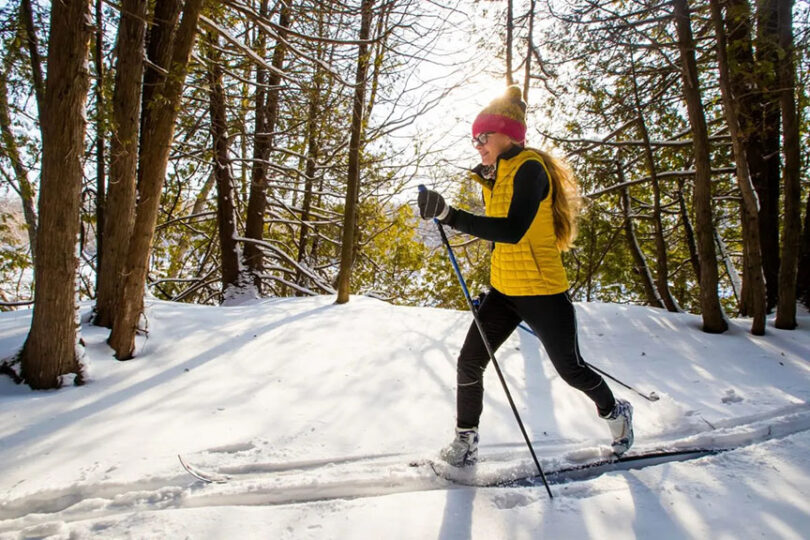
PHOTO: HIGHLANDOUTDOORS.COM
Jane Winik Sartville, Carolina Public Press
Tropical Storm Helene hit WNC less than two months before ski season started last winter. At Sugar Mountain in Avery County, the ski patrol building went up in flames, the parking lot buckled, falling trees knocked down the night-light system, the ski shop flooded and minor landslides marred the mountain.
Ironically, after all that, last year was a very good weather year for skiing. It snowed 76 inches on Sugar Mountain and the temps often were low enough for snowmaking.
“That definitely made us work very, very hard to recover from Helene and the damage that she did to the ski area,” Kim Jochl, president of the NC Ski Association and vice president at Sugar Mountain Ski Resort, told Carolina Public Press.
“It speaks to the resiliency of the people who live here, the people who work here. They understand the value of working hard so that we can open when the snow flies and the temperatures drop.”
As hard as Jochl and her colleagues worked to recover, it was impossible for last ski season to be a true economic boon for the region. Many, at the time, believed the mountains were completely out of commission.
Jochl hopes this year will be a repeat of last year’s voluminous snowfall. Early signs suggested she may get lucky. When David Jackson, president of the Boone Chamber of Commerce, looked out his window on Dec. 9, it looked like a picture-perfect snowy winter postcard.
“We need a win, and this is an opportunity for a win,” Jackson told CPP that day. “People can see that this area of the state is healed, and can continue to offer something that no other area in the state can.”
Finding enough people to staff the ski slopes is a challenge every year, but after Helene, it’s an even bigger concern.
Winter sports in WNC are fueled by seasonal employees who bounce between summer and winter jobs. This summer, those warm-weather jobs, like rafting and hiking tours, were stilted by the physical and economic woes of Helene. In response, some workers moved elsewhere or sought more consistent employment.
“It’s just taken a little bit longer for some of the resorts to get what they need in terms of employment,” Jackson said.
“It’s been harder this year across the board, whether that’s directly at the resorts or at the restaurants and hoteliers that support that tourism. It’s been weighing on the minds of businesses much more so than we hoped it would, certainly at this stage of recovery.”
At Sugar, Jochl has relied on foreign labor for 60 of the ski resort positions, an increase of 20 positions from last year. That labor has helped the ski mountains bounce back.
“The ski areas, from a business perspective, have moved on,” Jochl said. “Everything’s been fixed.”